

Projects - Jun 2025
Telchac Hyperboloid Reef
Manufacture and installation of the CCell hyperboloid reef in the Yucatan, Mexico
Read the post
Detailed modelling of your frontage compares a reef with walls, rock and beach nourishment on the same evidence, ready to put in front of a committee. Where a reef is the answer, we design and build it.
Erosion puts homes, roads and public spaces at risk. Before any money is committed, every option has to stand up to scrutiny, while repairs come round again and again and hard defences are expensive and often unpopular.
Before a budget is committed, you need evidence that the chosen solution will work on your coast, and the paperwork to get it permitted.
Each storm season brings another round of emergency works and sand replacement.
Residents, tourism businesses and fishers often oppose walls and rock that change how the coast looks and works.
Schemes increasingly have to show they protect habitats, not just property.
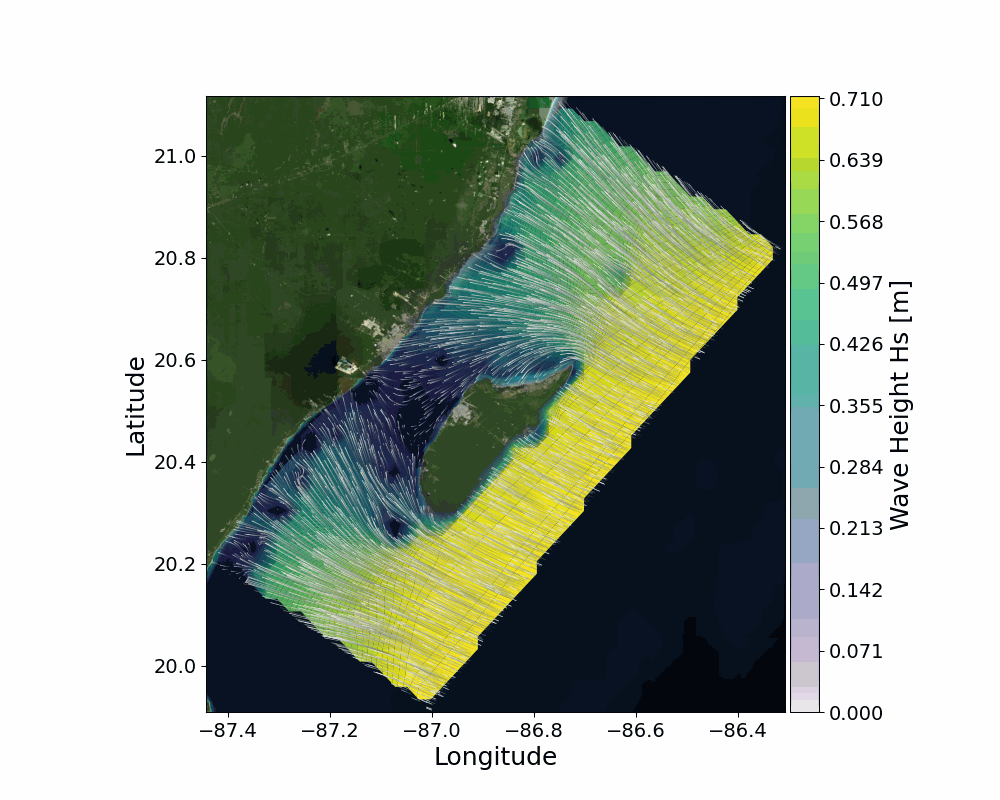
The first answer to that pressure is evidence. We model your frontage in detail, then use the model to compare the options, so the scheme you take forward is the one your coast actually needs.
Sometimes a hard defence is the right answer. Each option suits different conditions. This is how the main options usually compare, and the site model tests them on your frontage.
| Designed reef | Sea wall | Rock armour | Beach nourishment | |
|---|---|---|---|---|
| Keeps the beach | Yes - helps sand settle | Often lost in front of the wall | Partly | Yes, until the next storm |
| Visual impact | Low profile; visibility varies | High | High | Low |
| Habitat | Creates new reef habitat | Little or none | Some | Disturbs the seabed |
| Cost pattern | Build, power and maintenance | High build, repairs | High build, repairs | Repeated every few years |
| Evidence for decisions | Site model and monitoring data | Design standards | Design standards | Survey after each top-up |
Natural reefs are one of the coast's best defences. A global study found coral reefs reduce wave energy by an average of 97% before it reaches the shore. CCell reefs work on the same principle. The reduction at your site depends on reef layout, water depth and wave conditions.

We fit into the way public schemes are appraised and approved. You only move on when the evidence supports it.
A short review of your frontage, wave exposure and shoreline change. Is a reef worth including in your appraisal?
Book a briefingSite modelling of waves, currents and sediment with our own models, with reef and conventional options compared on the same basis. We check the model against how your coast actually changed in past storms, then project it forward under climate change.
About our modellingDetailed design, environmental surveys and support with licences and permits.
Built with local contractors, then monitored with our own sensors and underwater surveys, with regular reports.
About monitoring
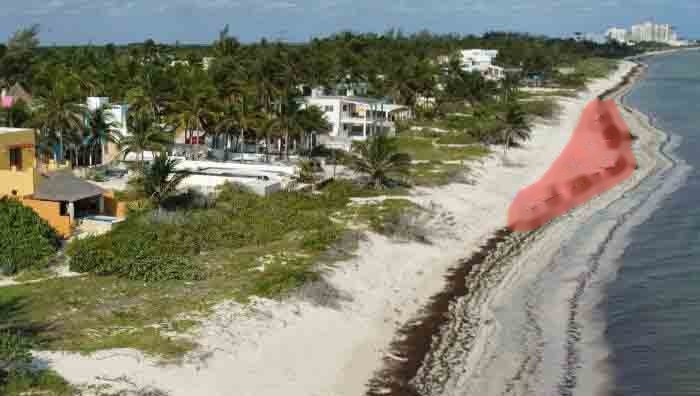
In 2021 we installed more than 50 reef units in front of nine properties, working with owners, fishers and the mayor. In 2024 we returned with the municipality and the Yucatan state government to build a 50 m reef 80 m offshore. Sand began to build up behind it within three weeks.

Hurricane Matthew damaged around 95 percent of homes in Eight Mile Rock. When we surveyed the coast the year after, the damage was concentrated where there was no offshore reef.

Where the answer is a reef rather than a wall, the scheme adds something to the place it protects.
Residents and visitors helping install the Telchac reef. Why we build reefs
Then we will say so. Options are compared on the same basis, and the modelling can be used on its own, whichever option you choose.
Yes. A reef can reduce the wave load on existing walls or groynes and help the beach in front of them recover.
We carry out the modelling and environmental surveys needed for applications, and support you through licensing.
Each design is tested against extreme events, including hurricane tracks and storm surge, before it is built.
The structures are designed to be permanent. We monitor the reef and shoreline and look after inspections and repairs under a service contract. If a reef ever has to come out, it is far quicker than removing a concrete breakwater.
In stages: a small commitment for survey and design, the main payment once permits are approved, and the balance on installation, then an annual service contract.
Our longest-running reefs are in warm water in Mexico. We have run cold-water trials in the UK and the Isle of Man. Rock grows more slowly in colder water, but the reef still reduces wave energy.
Yes. We supply the design, electronics and project management, and work with local fabricators, contractors and dive teams.
The modelling, habitat gain and monitoring data give you evidence for climate adaptation and nature funding applications.
Manufacture and installation of the CCell hyperboloid reef in the Yucatan, Mexico
Read the post
First full-scale CCell reef, Telchac Puerto, México
Read the post
Nature-based coastal defence systems, including wetlands, reefs and kelp forests are the future of sustainable coastal protection.
Read the postTell us about the frontage. We will review shoreline change and wave exposure, and give you a clear view on whether a reef belongs in your appraisal.
Paul Savill, Head of Client Services
paul@ccell.eco | +44 (0)207 690 0485